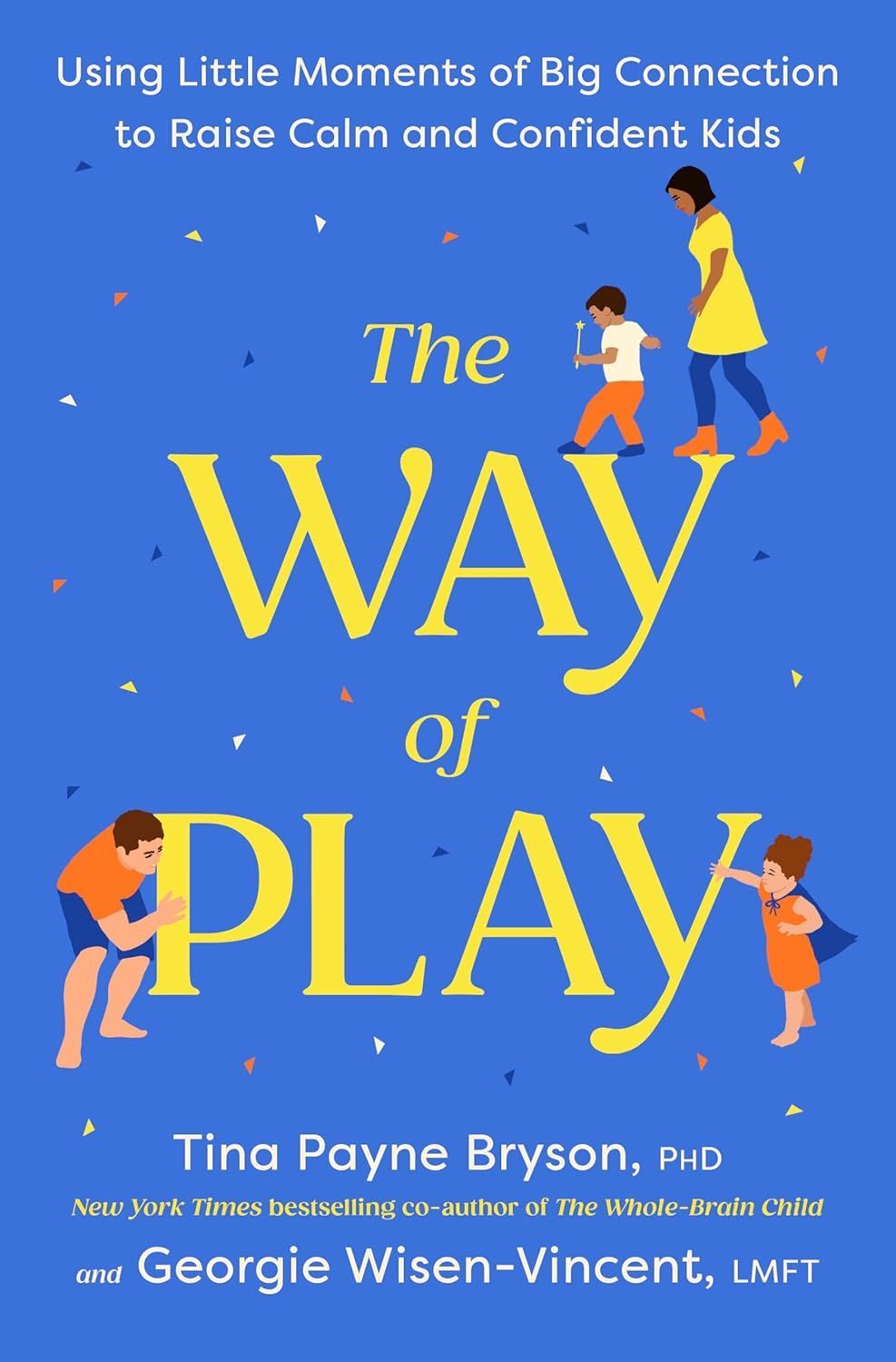
THE WAY OF PLAY – SOME SNIPPETS THAT I LIKE FROM TINA PAYNE-BRYSON AND GEORGIE WISEN-VINCENT’S BOOK
“Playing with our kids and really getting to know them is a little like scuba diving. From above the surface of the water, it’s hard to know what’s really happening down there under the waves. But when you take the plunge, you discover this whole other world: dynamic, real, fascinating, beautiful and full of life” (page 5)
Why is play important?
· Play is in children’s nature – it’s their first language and helps them learn with creativity, joy and connection
· It builds crucial skills and reduces unwanted behaviours. Children build confidence, resilience and self-understanding through play. And with this comes a reduction in fighting, rudeness and tantrums (a reduction not an extinction – these are all part and parcel of childhood!)
· It gives children appropriate ways to express and process their emotions and can be a powerful way to process what has happened and heal after difficult experiences.
· It can help us connect with our children and enjoy being with them. It helps us understand their inner world and delight in them, building their self-esteem
What if we don’t know how to play? (something I hear from lots of parents)
· If we struggle to play it’s not our fault – our brains grow and change since we were children.
· We have to relearn what it means to think and play like a child
· For those of us who haven’t had playful parents when we were growing up it may be harder – but it’s never too late to learn
What are the strategies that the authors talk about?
This is a very brief summary – it’s well worth reading the book for a full exploration with lovely illustrations, example and science behind the strategies.
· Think Out Loud
o Why? This helps children understand their thoughts, feelings, wishes, intentions and desires more. When we do this it helps them learn that others can understand them and help them understand themselves. We help children to pay attention to what is happening inside themselves so they can develop positive, conscious, international responses rather than the default reaction with no awareness!
o How? We do this by observing and narrating what we see in our children’s play, commenting on mental and emotional stages. We do this by observing and attuning, coming up with a hypothesis, saying it out loud (don’t worry if your guess is wrong – your child normally lets you know!)
· Make Yourself a Mirror
o Why: help children understand their emotional life and enhance their connection with and empathy for others.
o How do we help children exercise the empathy muscle? (love this term!). Observe and attune into what your child is feeling with your body, face and voice, activate your child’s mirror system and remember empathy is mainly conveyed non-verbally (as well as verbally)
· Bring Emotions to Life
o Why: help children recognise, manage and express feelings.
o How: observe and attune (as you may have noticed, we always start with this!) watching for emotional cues, act out your part adding emotions to your character (if your child invites you into their play) – alternatively, touch on emotions as the narrator of their play.
· Dial Intensity Up or Down (this feels more about general parenting that play)
o Why: this helps children regulate their emotions and actions when they are struggling and helps them learn that someone will be there for the when out of control.
o How:
- Observe and attune – looking out for your child becoming dysregulated.
- Chase the why (I love this phrase) – see if you can work out what their dysregulation may be about? Look beyond the behaviour (if you want to learn more about this read Mona Delahooke’s work – it’s brilliant!).
- Dial the intensity up (through cooling things off ) or down (through starting low and going slow)
- Regulate and repair
o Scaffold and Stretch:
- Why? Help children learn resilience in the face of difficult situations and show them others can show up when things get hard.
- How? This is about helping your child face something difficult in a low stakes way – through play. Firstly, observe and attune – to see if they may benefit from some support. Then offer scaffolding and stretching – it’s getting the balance right between not taking over when there’s a little struggle (my tendency!) and not letting them struggle so much they get stressed and don’t learn…
- Narrate to Integrate
· Why? using stories (obviously my favourite thing!) to help children understand and deal with difficult situations.
· How? Observe and attune (did you guess that?!), oscillate (between different halves of the brain – use logic and emotions), integrate and elevate.
- Set Playtime Parameters
- Why: boundaries teach children how to make positive decisions and help them feel safer. Children need limits, connection, structure and nurture
- How? Set some rules for play by taking care of yourself and of the space (try not to make it too chaotic!). Remember you are the pit crew not the race engineer (!). If you’ve had to set a limit then acknowledge the desire but keep the limit and offer alternatives. The authors set some good ideas for transition tips (as transition out of play can be HARD!).
Finally, Tina and Georgie end with the importance of being playful outside of the playroom. For those of you that have read my parenting handbook and know about my love about the PACE model you’ll have guessed that I was pleased to see this in!
Overall, a great read…well worth a delve